 Nick Freiling
Faith, Religion, and Descriptive Versus Prescriptive Belief
The difference between faith and religion is subtle yet fundamental for understanding the true nature of our inner life.
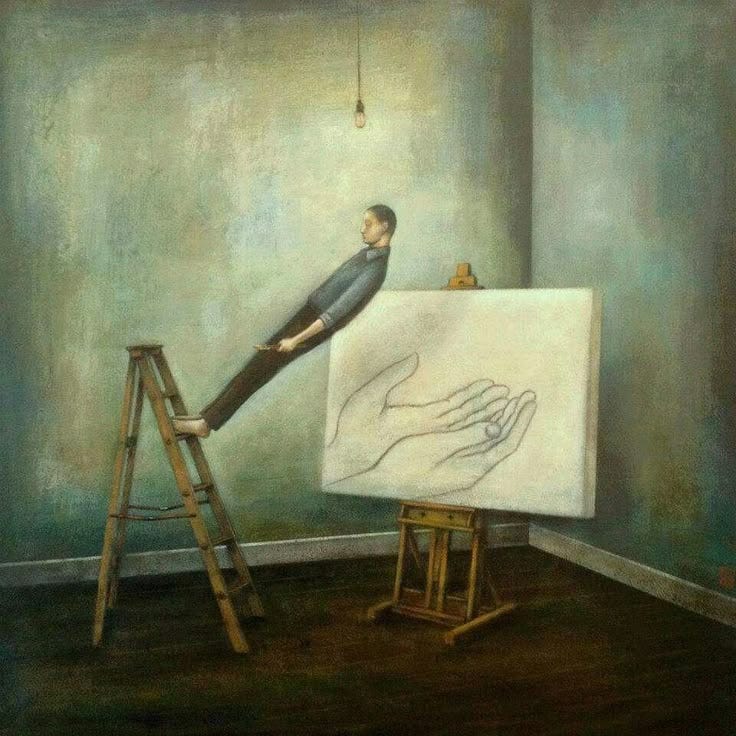
I reflect often on the difference between “faith” and “religion.” I can hardly imagine not doing that, so long as I insist on trying to be a faithful and religious person.
We often use these words interchangeably, but they are different things.
I think that, for just about all of us, faith is a core part of our identity. It’s the deepest thing about who we are, whether we admit that or not. It’s what gets us up in the morning – some reason for continuing on through pain and suffering, and despite the lack of “proof” that there’s any purpose to life (we all die, in the end) and the continual disappointments we meet along life’s path.
Faith is a personal, internal certainty that colors how we see things. It doesn’t need a formal label or definition to be real, and its structure or “content” may not even be something we know how to describe. I think we often just don’t have the words to explain something so ingrained into the fabric of ourselves. Our faith is a very hard thing to articulate discursively. Most of it, I think, just goes without saying.
And it’s not only religious people who have faith. Everyone has some kind and measure of faith — that things will work out, that life has a purpose — even if they categorically refuse to adopt any specific or coherent way to express it.
And that’s what religion is – a specific and coherent way to express faith. More definitively, religion is a structure or narrative that gives content to faith, and maybe one that organizes what most people experience, more-or-less, as instinct into something more rational and easier for a third-party to understand.
In this way, religion is descriptive. It’s an “intellectual” development of faith that translates a personal and usually abstract experience into something that’s organized on some margin or other. It describes faith, though with varying degrees of success (sometimes the way one experience their religion may not align well with their faith).
Usually, if this religion is sufficiently intelligible to other people, it’s something shared amongst many people. It’s possible, I suppose, to have your own religion. But if it’s not shared, what would be the point? Leave your faith in the world of subjective instinct if there is nobody else who needs to understand it.
Anyways, there are many religions and they each use different stories and “models” to give structure to faith. I find Christianity particularly compelling. The narrative of God “incarnate” is more powerful than I can imagine any other story about God and the human condition might be. But there are other stories that have stuck around for millennia, even as the world around the generations of people who’ve embraced such stories (and, for that matter, the people themselves) has changed dramatically.
Faith is what happens inside. Religion is what gives expression to faith.
Maybe this all seems obvious. I think most people who’ve given serious thought to their “faith” and their “religion” have come to these same conclusions. So why bring it up?
A few reasons…
First, insofar as a religion entails one being “saved” from hell or from some corrupt condition (this is certainly a core tenet of Christianity), and insofar as having “faith” is part of how that salvation happens (this is, too, a core tenet of Christianity), this means that one may ostensibly be “saved” without religion. That is, one might have “saving faith” but not adhere to any religious creed or profess any religious framework. Jesus told certain of his followers that “their faith” had saved them, and he said this to both Jew and Gentile. These people had “saving faith” but different religions, which is something many religious adherents insist is not possible.
Second, this helps demarcate the two roles of religion – “descriptive” and “prescriptive” – which can help us to avoid the kind of cognitive dissonance that otherwise has many religious people (young people, especially) believe that they do not have faith when they find themselves in disagreement with their religion. Religion articulates faith, but it also gives shape to faith. Religion does not necessarily demand anything in return.
Third, this helps us to avoid the pitfalls of fanaticism and rigid ideology. When we recognize that our religion is, in large part, descriptive, we don’t have to get mad when people express a different religion. They are often just trying to be honest with themselves when they do this.
This understanding has helped me reconcile the concept of faith with the identities of people who do not consider themselves religious. They may possess an intrinsic faith – a certainty about life or purpose – but simply haven’t found a framework or story that describes it fully (I know many such people, full of hope and a kind-of faith yet irreligious). Religion, in this sense, serves as a descriptive tool: it articulates and gives shape to what someone believes, rather than demanding a belief in return. When faith is understood primarily as descriptive, it avoids the dangers of fanaticism and rigid ideology – problems that can arise when religion becomes solely prescriptive, telling people what they must do without allowing space for personal belief.
I think this descriptive approach to faith encourages a humble understanding of religion. It allows a person to find their own story within a religious framework, making what’s most important to them intelligible and relatable. And for those who inherit a religion, this process can be even more significant, as it involves aligning inherited beliefs with personal convictions. Ideally, a person’s stated beliefs should reflect what they truly value and understand. Religion, when it works well, helps us marry inherited beliefs with personal understanding over time.
However, this raises a question: If religion adequately describes our beliefs, at what point should it also start to prescribe how we act?
For me, this tension is particularly pronounced in areas where I don’t fully understand the teachings but choose to follow them anyway (like in the case of the Catholic Church’s teaching on contraception). While this doctrine may not make intuitive sense to me, I let my Catholic religion guide me here, respecting its authority even in moments of personal uncertainty. In other areas of Catholic doctrine, I find a closer alignment with my beliefs. There, the doctrine serves as both descriptive of my own thoughts and even aspirational, giving me insights beyond what I could articulate on my own.
This interplay between description and prescription is fundamental to our inner life. Religion helps us articulate our beliefs, describing an moral or metaphysical conviction we may already hold, but it can also provide a guide where we lack the concepts (or, simply, the time and energy) to extrapolate our faith into a model for how to behave or how to think about “ultimately reality.” Religion can help us to live in alignment with our inner-most beliefs. I think striking a balance between these two things – reckoning honestly with what we believe while recognizing where faith may call us to act or conform beyond our understanding – is one of our most important human duties. This is a big part of what, in my Catholic tradition, is called formation of conscience.
Our inner life should be an evolving dialogue with oneself – a commitment to finding meaning and truth using our faith and our reason – and not just conformity to religious prescriptions. But openness to religious prescriptions may fill in gaps that we might, without religion, otherwise never even notice.
In the end, I think this interplay between descriptive and prescriptive belief challenges us to be honest about what we believe and to engage thoughtfully with the principles that our faith presents. It’s through this balance that we can integrate religion meaningfully into our lives – not as a set of rules to follow blindly but as a story that resonates deeply with who we are and what we aspire to become.