 Nick Freiling
From New Israel to Israel First
A quick reflection on how American Christians claimed, then relocated, the Holy Land
On Tucker Carlson’s podcast two weeks ago, Senator Ted Cruz said that he supports Israel because the Book of Genesis commands it. He called supporting Israel a “Biblical” command.
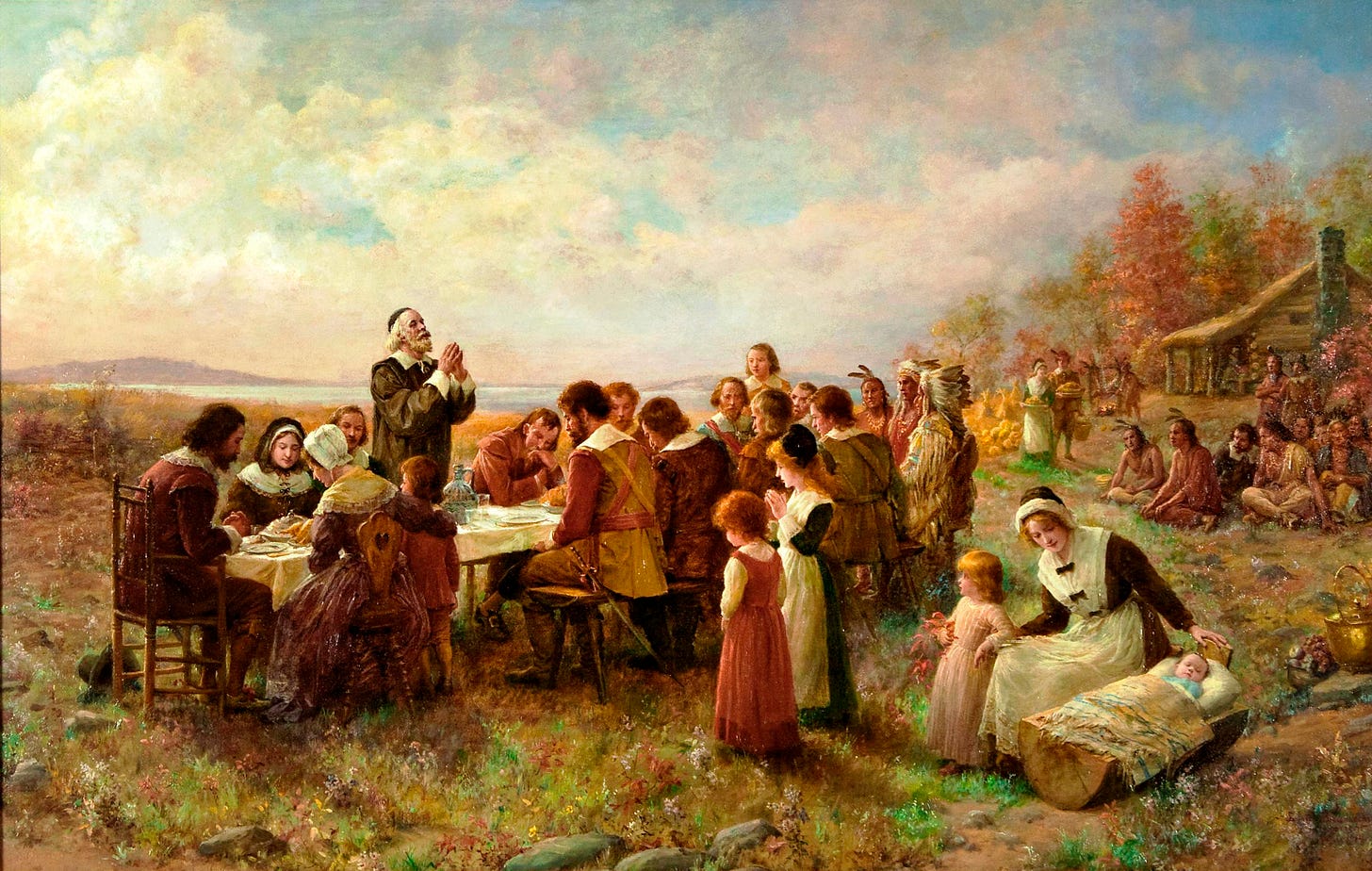
Now, I think that’s an anachronistic (and even anti-Christ) reading of that verse. But that’s beside my point. Consider that when European religious refugees and separatists settled North America, they didn’t name their towns things like Salem, Canaan, Nazareth, or Bethlehem by accident. Those names reflected a deep identification with Israel. Many early Euro-American religious communities truly believed they were the “New Israel.”
(Go and read Puritan sermons or founding charters. They are saturated with Old Testament covenant language.)
I’m not saying this was good or bad. But it’s certainly a fact, right? These settlers viewed themselves this way. It’s why they risked their lives crossing oceans and plains.
The Mormons – the largest religion founded on American soil – arguably took this the furthest. The LDS Church teaches that they, not modern-day Israel, are the true heirs of Abraham’s covenant. New converts to the LDS Church receive a patriarchal blessing (“You are of the tribe of Ephraim”). And of course, their trek across the North American continent in search of their own “promised land” – like Moses and the Israelites crossing Sinai – is a defining episode central to their religious conscience.
Likewise, enslaved Black Americans found hope and self-understanding in the Exodus story. Their spirituals and sermons are full of “Pharaohs” and deliverance. Many Black churches today still carry forward this living sense of themselves as a people waiting for liberation – not just as a metaphor, but as a genuine identity.
For centuries, American communities claimed the line of Abraham for themselves. This gave them a galvanizing sense of destiny and mission.
Even President Reagan embraced this vision. He spoke of America as “a land of destiny” and a “city on a hill” (quoting Puritan John Winthrop). He was even known to repeat the apocryphal tale of an angel of God signing the Declaration of Independence (a story invented by American mystic Manly P. Hall). Reagan’s rhetoric toward this end wasn’t original. Americans love it, and him, because it resonated with their mythic self-identification with a “chosen” people.
But today, this identification has shifted. Millions of fervent church-going Americans (evangelicals, especially – the base Ted Cruz claims to represent) no longer see themselves as the direct heirs of the promise. Instead, they see the modern State of Israel as the chosen people. America’s divine mission, in this view, is to protect Israel – to live out the old sense of “chosen-ness” vicariously through Israel rather than claiming it directly.
Interesting, right?
Before 1947, no American could have made the claim Cruz made two weeks ago. And it wasn’t until the 1980s that the argument found wide traction. It is arguably John Hagee, more than anyone, who enshrined “Christian Zionism” as a pillar of the modern Religious Right.
I wonder what it means for our politics that this vision has shifted – that the spiritual center of America’s “chosen” identity now lies overseas? I’m not sure it was ever wise for American Christians to conflate themselves with Israel, but that they did so is undeniable. And so, I think, is the fact that the founding of the modern State of Israel profoundly redirected that old self-conception.