 Nick Freiling
The Illusion of “Traditionalist Revival”
A short meditation on what isn't happening.
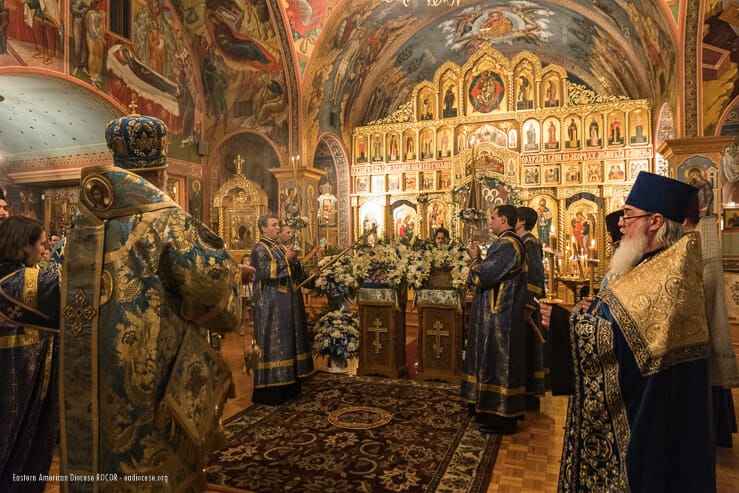
I see a lot of religious “trad” folks online talk about mass conversions, revival, and spiking interest in uber-traditional rites and liturgies. It’s become a “thing” to say, that young people want tradition and are showing up en masse to the oldest of extant expressions of Christian faith – Latin Mass, Divine Liturgy, other Eastern rites.
I tend to think most of this is an illusion.
The simple fact is that statistics just don’t show anything like a revival in these traditions. And honestly, I heard the same kind of talk back when I was in college 15 years ago. I probably had a hundred conversations on this exact topic – “young people want tradition!”
But since then? These traditions haven’t gained any significant share of overall church attendance. It’s probably true that they skew younger now, but that’s largely because the older generation – the ones who grew up with this stuff as the norm (for Catholics, pre-Vatican II) – is dying out.
Here’s what I think is really going on: Young people have always liked exploring unfamiliar things, and they always will. That’s part of why so many leave church altogether – it’s new, it’s different, it’s freedom. A small number of them stop off at traditionalist communities for a while. But then life happens – they meet a spouse from a different tradition, move somewhere that doesn’t have a Latin Mass or an Orthodox parish, or just drift into a more “mainstream” church with friends or family.
And once you have a family, practical concerns starts to matter more than liturgics and aesthetics: nurseries, youth ministry, meal trains, people to help you out. Most young people become less ideological and more pragmatic with time. I think of my child’s godfather – a cradle Catholic who’s taken his wife and (now seven) children to Mass almost every Sunday for two decades – who told me they switched parishes when their old priest started using too much Latin and a few of his kids started zoning out because of it.
But spend too much time in a particular algorithm bubble, and it’s easy to start believing that the average young Catholic attends Latin Mass, or that the average young man’s favorite author is Seraphim Rose.
(Many people will read this and wonder what the heck I’m talking about, and this proves my point.)
The reality? Almost no one is like this. Around 1% of Mass-attending Catholics go to Latin Mass, and Mass-attending Catholics themselves make up maybe 3% of young adults. Same story within Eastern Orthodoxy. I recently saw a glowing write-up of a “booming” Orthodox parish in Texas – it had fewer than 200 members. In that same Texas suburb, there are probably three dozen churches with bigger congregations, and hundreds across the metro area.
I think of a local evangelical megachurch here in Jacksonville that hosted their annual “Baptism on the Beach” last month. 11,000 people showed up. That’s twice the size of my Catholic parish (the largest in the diocese), which is 10 times bigger than the local Latin Mass parish. And I’d bet that this single baptism event brought in more new initiates to that one church than all the “traditionalist” churches in the country combined so far this year.
Why am I saying all this? Because I think in-group vibes are blurring people’s sense of reality. The fastest-growing churches in America aren’t traditional. They’re evangelical megachurches with loud, passionate worship, practical and engaging preaching, and strong community life. And they’re doing a much better job reaching the people no one else is reaching. Just 40 years ago, almost nobody in America attended a mega-church. Now? One-in-ten American churchgoers attend a mega-church regularly (source: Hartford Institute, 2020 Megachurch Report).
I’m not knocking traditionalist communities. It’s good that some young people find relevance in tradition. I do! I think more people would attend something more “traditional” if they knew more about why those traditions exist. But that’s abnormal, and a church that wants to reach more people needs to have the other 99% in mind.
“Todos, todos, todos,” as a wise man once said.